
Textile Energy Saving Case Study: 487 kW Reduction at Kohinoor Textile Mill Gujar Khan
Introduction
Energy efficiency is a critical factor in improving profitability and operational performance in the textile industry. With rising electricity costs, textile manufacturers are increasingly focusing on optimizing power consumption and eliminating energy wastage.
This textile energy saving case study highlights how Sanyou Machinery & Technology identified a significant energy saving opportunity of 487 kW at Kohinoor Textile Mill, Gujar Khan through detailed load analysis and system evaluation.
Project Overview
Kohinoor Textile Mill, located in Gujar Khan, operates multiple spinning and post-spinning departments requiring consistent and efficient power utilization. To enhance system performance and reduce electricity costs, Sanyou conducted a comprehensive load comparison study across key departments.
The objective was to identify the gap between installed capacity and actual running load, and uncover opportunities for optimization.
Key Findings
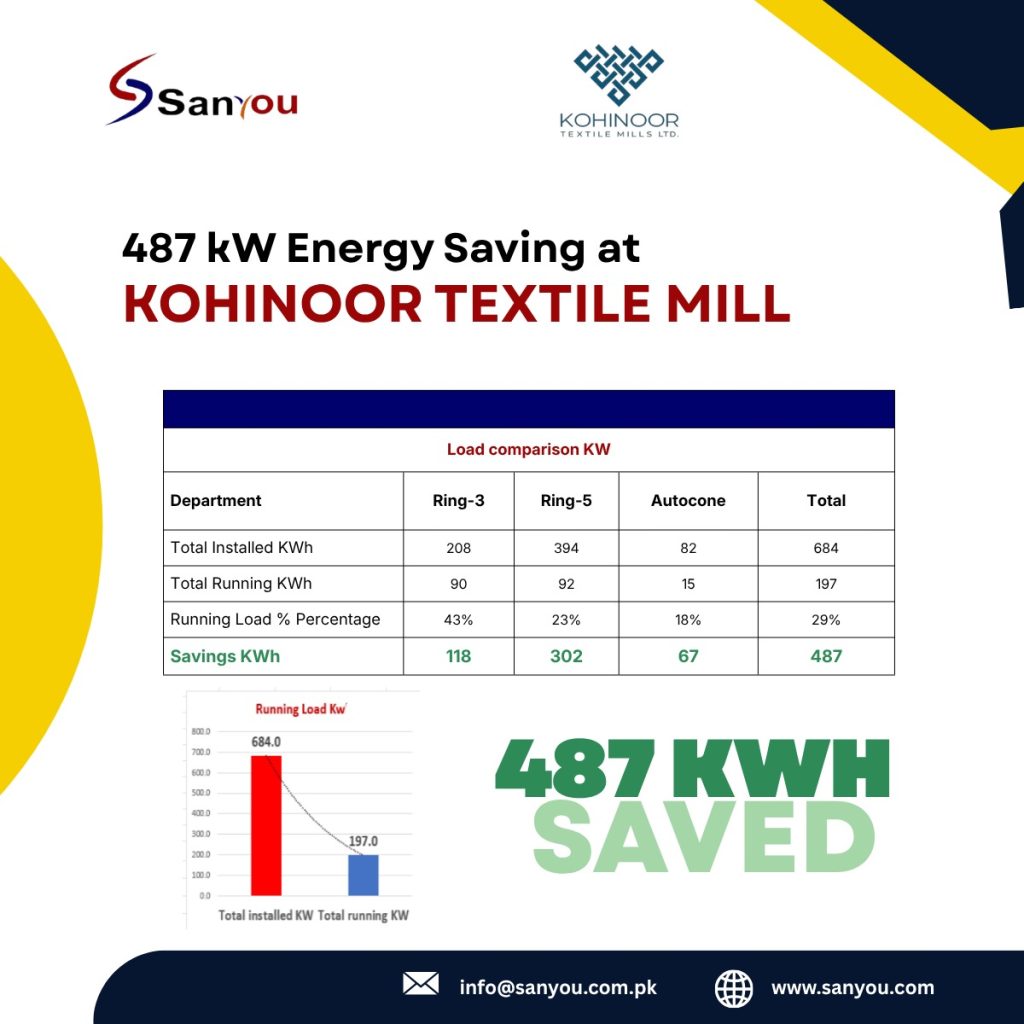
The analysis revealed a substantial difference between installed load and actual power consumption:
| Description | Value |
|---|---|
| Total Installed Load | 684 kW |
| Actual Running Load | 197 kW |
| Energy Saving Potential | 487 kW |
This clearly indicates that a large portion of the installed electrical capacity was underutilized, leading to unnecessary energy consumption and higher operational costs.
Department-wise Energy Saving Insights
A detailed breakdown of the savings across departments provided deeper clarity:
Ring-3 Section
- Energy Saving: 118 kW
This section showed moderate inefficiencies, with optimization opportunities through better load distribution and system control.
Ring-5 Section
- Energy Saving: 302 kW
The highest saving potential was identified in this section, indicating significant overcapacity and scope for optimization.
Autoconer Section
- Energy Saving: 67 kW
Even in post-spinning processes, load inefficiencies were evident, highlighting the need for system-level optimization.
Understanding Textile Energy Optimization
Many textile mills operate with systems designed for peak capacity, but actual production requirements are often lower. Without proper monitoring and analysis, this results in:
- Excessive power consumption
- Increased electricity bills
- Inefficient equipment utilization
- Higher maintenance costs
- Reduced overall efficiency
Textile energy optimization focuses on aligning installed capacity with actual operating requirements to eliminate these inefficiencies.
Benefits of Load Optimization in Textile Mills
Significant Cost Reduction
Reducing unnecessary power consumption directly lowers electricity expenses, improving overall profitability.
Improved System Efficiency
Optimized load management ensures equipment operates at optimal efficiency levels.
Better Equipment Utilization
Systems are used according to actual demand, reducing strain and improving lifespan.
Enhanced Operational Control
Better load visibility allows for smarter decision-making and system control.
Sustainable Manufacturing
Lower energy consumption contributes to reduced environmental impact and supports sustainability goals.
Sanyou’s Engineering Approach
At Sanyou Machinery & Technology, we adopt a data-driven and practical approach to energy optimization in textile mills. Our services include:
- Industrial load analysis
- Textile energy audits
- HVAC and AC plant optimization
- Power consumption monitoring
- Automation and control systems
- Utility system optimization
Each solution is customized based on plant requirements to ensure maximum efficiency and measurable results.
Why Energy Analysis is Essential for Textile Mills
Energy is one of the highest operational costs in textile manufacturing. Without regular analysis, inefficiencies remain hidden, leading to continuous financial losses.
Conducting periodic energy assessments helps mills:
- Identify underutilized capacity
- Reduce unnecessary power usage
- Improve operational efficiency
- Enhance production performance
- Increase profitability
The Kohinoor Textile Mill project is a clear example of how proper analysis can unlock significant energy-saving opportunities.
Conclusion
This project at Kohinoor Textile Mill, Gujar Khan demonstrates the impact of effective load management and energy optimization. By identifying a potential saving of 487 kW, the mill can significantly reduce power consumption and operating costs while improving overall efficiency.
Sanyou Machinery & Technology continues to support textile manufacturers with innovative engineering solutions and practical energy-saving strategies that deliver real, measurable results.
Project Highlights
487 kW Energy Saving Identified
Reduced Power Consumption
Improved System Efficiency
Optimized Load Management
Lower Operating Costs
Sustainable Industrial Operations
Ready to Optimize Your Textile Mill?
Unlock hidden energy savings in your plant with Sanyou’s expert engineering solutions.