Textile Energy Saving Case Study: 487 kW Reduction at Kohinoor Textile Mill Gujar Khan
Why Loom Shed Optimization Matters
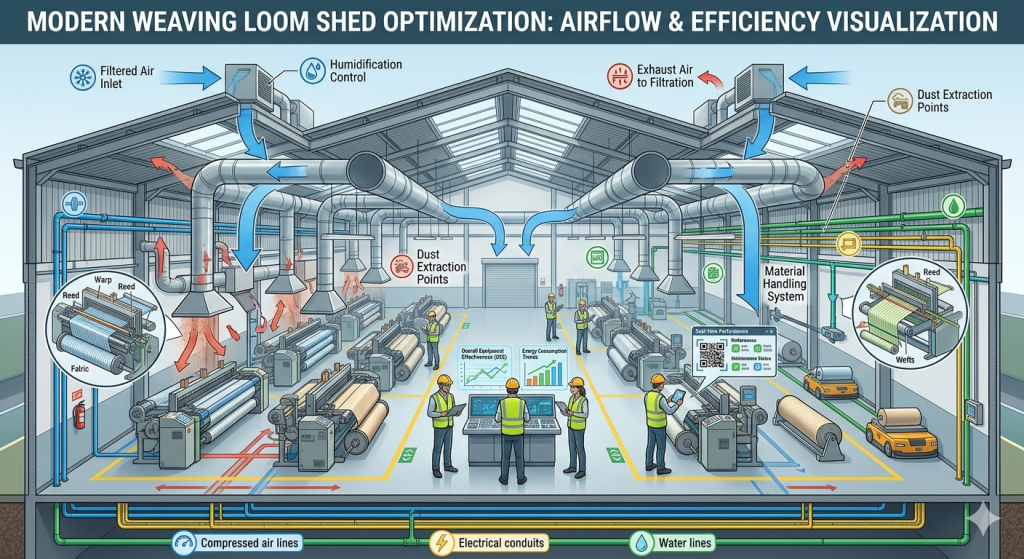
The loom shed is one of the most important areas in a weaving mill. It is where hundreds of looms operate continuously, making efficiency, airflow, and equipment utilization critical for smooth production.
Many textile manufacturers focus on increasing production capacity, but they often overlook how effectively their existing resources are being used. A well-managed loom shed can improve machine performance, reduce operational costs, and create a more stable production environment.
At Puri Textile Mill, a detailed Loom Shed Optimization study was carried out to evaluate actual operating conditions and compare them with installed capacity. The findings revealed valuable opportunities for improving efficiency and reducing unnecessary power consumption.
Project Findings
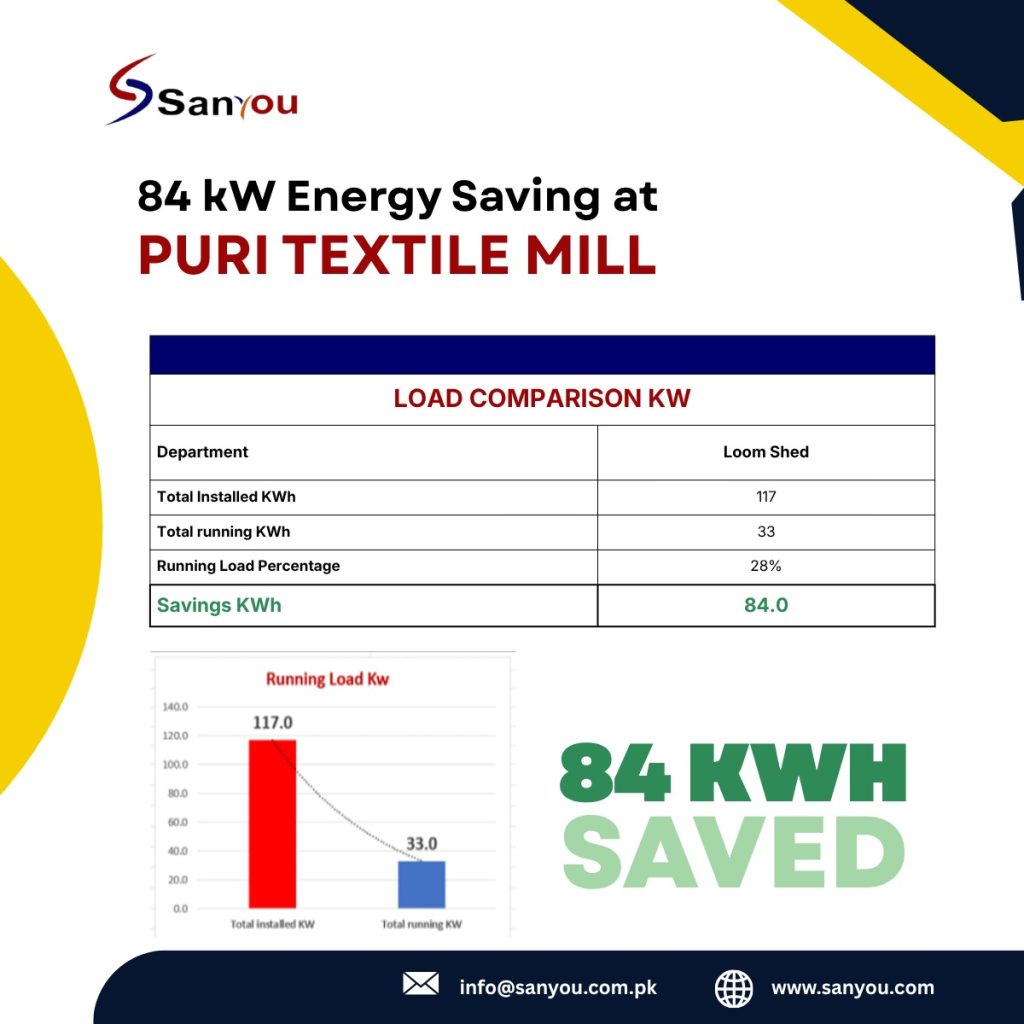
The analysis of the loom shed showed a noticeable difference between installed load and actual running load.
- Installed Load: 117 kW
- Running Load: 33 kW
- Running Load Utilization: 28%
- Energy Saving Potential: 84 kW
These results indicate that the department was operating with significantly lower demand than its available capacity, highlighting opportunities for better resource management.
Common Factors That Affect Loom Shed Performance
Every weaving department faces unique challenges, but several factors commonly influence overall performance:
Airflow and Ventilation
Proper airflow helps maintain a comfortable working environment and supports consistent machine operation. Poor air circulation can affect both equipment performance and operator productivity.
Equipment Utilization
Over time, production requirements change. Systems that were originally designed for higher capacities may no longer match current operating conditions, leading to underutilized resources.
Utility Management
Regular monitoring of electrical load, airflow systems, and supporting utilities helps identify areas where improvements can be made without affecting production output.
Benefits of Loom Shed Optimization
A structured optimization approach can provide several long-term advantages:
- Improved utilization of installed infrastructure
- Better visibility of actual operating requirements
- Reduced unnecessary power consumption
- Enhanced production stability
- Lower operating costs
These benefits not only improve efficiency but also support better decision-making for future expansion and investment planning.
What Textile Mills Can Learn From This Project
The Puri Textile Mill project demonstrates the importance of evaluating actual performance rather than relying solely on installed capacity figures.
By understanding how equipment and utilities are being used in day-to-day operations, mills can uncover opportunities that may otherwise remain hidden. Even small improvements in utilization and system management can create meaningful operational and financial benefits over time.
Conclusion
The Loom Shed Optimization assessment at Puri Textile Mill identified a potential saving of 84 kW, while also providing valuable insight into equipment utilization and department performance.
As textile manufacturers continue to focus on productivity and cost control, regular evaluations of loom shed operations can play an important role in improving efficiency and supporting long-term growth.
At Sanyou Machinery & Technology, we help textile mills optimize their operations through practical engineering solutions, detailed performance analysis, and data-driven recommendations that deliver measurable results.