
Sapphire Reliance Cotton Achieves 111 kW Energy Savings Through Drawing Simplex Optimization
Understanding Energy Consumption in the Drawing Simplex Process
The Drawing Simplex department plays an important role in spinning preparation. It is responsible for improving fiber uniformity, blending material effectively, and preparing sliver for the next stages of yarn production. Because these machines operate continuously during production, they contribute significantly to a mill’s overall power consumption.
Many textile mills focus primarily on production output, but monitoring actual energy utilization is equally important. When installed capacity is much higher than the real operating requirement, unnecessary energy costs can accumulate over time. Conducting regular load analysis helps mills identify opportunities for optimization and improve overall plant efficiency.
Why Load Analysis Matters in Textile Mills
Installed load represents the total power capacity available to a department, while running load reflects the actual power being consumed during operation. Understanding the difference between these two values provides valuable insight into system utilization and operational efficiency.
A detailed assessment allows mill management to:
- Identify underutilized equipment and systems
- Evaluate actual energy requirements
- Improve resource allocation
- Reduce operating expenses
- Support long-term sustainability goals
For spinning mills operating in highly competitive markets, these improvements can have a direct impact on profitability.
Sapphire Reliance Cotton Project Overview
As part of an energy optimization assessment, Sanyou Machinery & Technology conducted a detailed evaluation of the Drawing Simplex section at Sapphire Reliance Cotton.
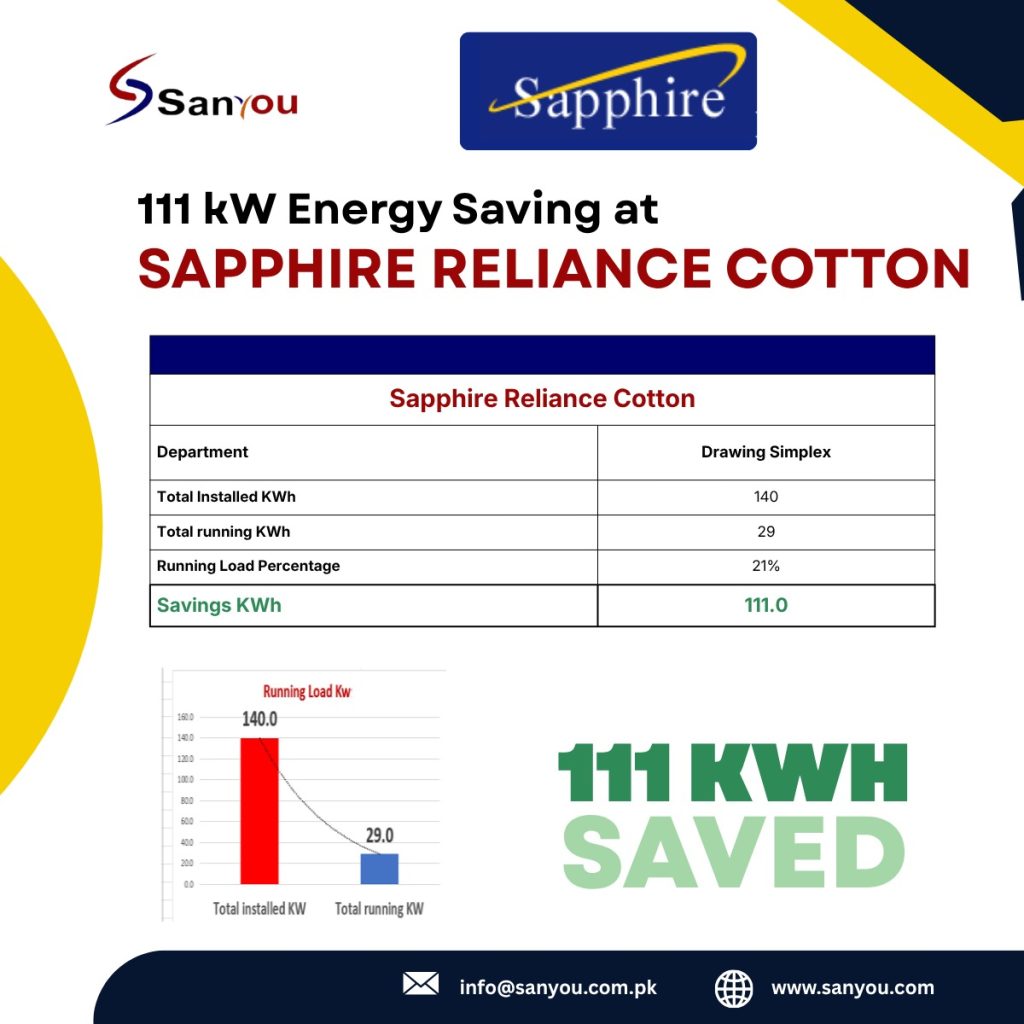
The analysis revealed the following results:
| Parameter | Value |
|---|---|
| Installed Load | 140 kW |
| Running Load | 29 kW |
| Running Load Utilization | 21% |
| Energy Savings Identified | 111 kW |
The findings demonstrated a significant gap between installed capacity and actual power requirements. By understanding real operating conditions, opportunities for improved efficiency and optimized energy utilization were identified.
The Importance of Drawing Simplex Efficiency
The Drawing Simplex process serves as a critical link between carding and subsequent spinning operations. Consistent performance in this department helps ensure:
Better Sliver Quality
Uniform sliver preparation contributes to improved yarn quality and more stable spinning performance.
Improved Production Flow
Efficient machine operation helps maintain smooth material movement throughout the spinning process.
Reduced Operating Costs
Monitoring energy consumption and equipment utilization can uncover opportunities to reduce unnecessary expenses.
Enhanced Plant Performance
Optimized systems contribute to better overall efficiency across the production chain.
Common Energy Challenges in Spinning Mills
Many spinning facilities face similar operational challenges, including:
- Oversized utility systems
- Underutilized installed capacity
- Inefficient airflow management
- Limited monitoring of actual energy consumption
- Rising electricity costs
Addressing these issues requires a combination of engineering expertise, operational analysis, and practical optimization strategies.
The Value of Energy Optimization
Energy optimization is not simply about reducing power consumption. It involves understanding how equipment, utilities, and production requirements interact within a manufacturing environment.
Benefits of energy optimization include:
- Lower electricity costs
- Improved equipment utilization
- Better operational visibility
- Reduced environmental impact
- Stronger competitiveness in global textile markets
As energy prices continue to rise, mills that actively monitor and optimize their consumption gain a significant advantage over those that rely solely on installed capacity figures.
Looking Beyond Energy Savings
The Sapphire Reliance Cotton project demonstrates the importance of data-driven decision-making. The goal is not only to identify energy-saving opportunities but also to understand how production systems are performing in real operating conditions.
Regular performance evaluations can help mills:
- Plan future investments more effectively
- Improve resource utilization
- Support sustainability initiatives
- Increase operational reliability
- Maintain long-term profitability
These benefits often extend far beyond the immediate energy savings identified during an assessment.
Conclusion
The Drawing Simplex assessment at Sapphire Reliance Cotton highlighted an energy-saving potential of 111 kW, demonstrating the value of detailed load analysis and operational evaluation.
With an installed load of 140 kW and an actual running load of 29 kW, the project provides a clear example of how understanding real system requirements can help textile manufacturers improve efficiency and reduce operational costs.
As the textile industry continues to focus on productivity, sustainability, and cost control, regular energy assessments and optimization studies remain essential tools for achieving long-term success.