
Textile Energy Optimization Case Study: 169 kWh Running Load Reduction at Sapphire Fibres Limited
Introduction
In today’s competitive textile industry, energy efficiency is a critical factor in maintaining profitability and sustainable operations. Rising electricity costs continue to challenge textile manufacturers, making energy optimization and intelligent load management essential for long-term success.
Sanyou Machinery & Technology recently completed a successful energy optimization project at Sapphire Fibres Limited, resulting in a significant reduction in running load and substantial energy savings. Through detailed load analysis and system optimization, the project demonstrated how strategic engineering solutions can improve operational efficiency while reducing power consumption.
Project Overview
Sapphire Fibres Limited is one of Pakistan’s leading textile manufacturers, operating modern spinning facilities that require reliable and efficient utility systems. As part of Sanyou’s commitment to helping textile mills reduce energy costs, a comprehensive load assessment was conducted across key production departments.
The analysis focused on the Blowroom and Card + Drawing Simplex sections, where opportunities for load optimization and energy savings were identified.
Key Project Results
The energy optimization study delivered impressive results:
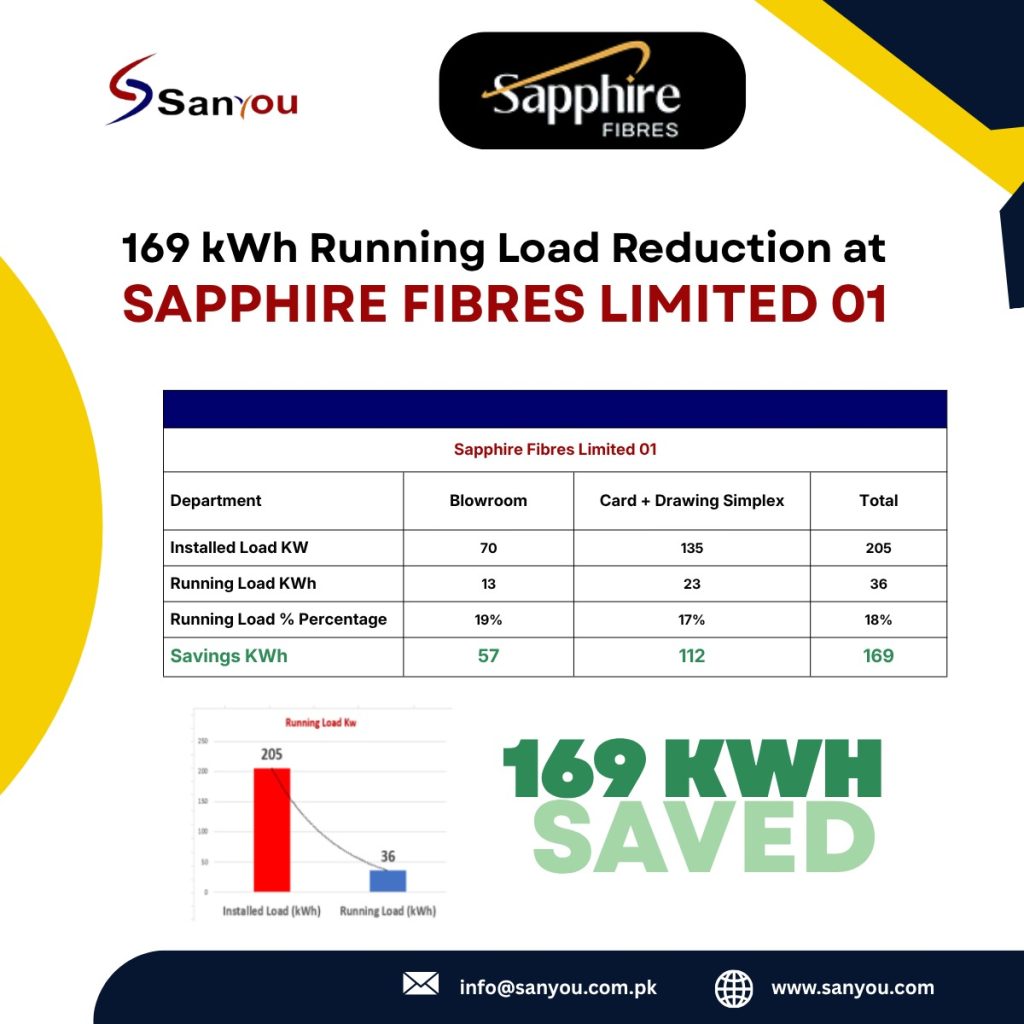
Total Installed Load
205 kW
Actual Running Load
36 kW
Total Energy Saving
169 kWh
Running Load Utilization
18%
These findings revealed that the facility was operating with a significantly lower actual demand than the installed capacity, highlighting a major opportunity for energy optimization and load management.
Understanding Running Load Optimization
Many textile mills install systems with capacities designed to accommodate peak production requirements. However, actual operating conditions often differ from design assumptions, resulting in excessive installed capacity and underutilized equipment.
Without regular energy audits and load analysis, manufacturers may unknowingly experience:
- Excessive power consumption
- Increased operating costs
- Inefficient equipment utilization
- Higher maintenance expenses
- Reduced energy efficiency
Running load optimization helps identify these inefficiencies and provides actionable solutions for reducing unnecessary power usage.
Benefits of Energy Optimization in Textile Mills
Reduced Electricity Costs
Lower running loads directly contribute to reduced electricity bills, improving profitability and reducing production costs.
Improved Equipment Efficiency
Optimized systems operate closer to their ideal performance range, improving reliability and reducing wear on equipment.
Better Resource Utilization
Energy optimization ensures that installed infrastructure is utilized more effectively based on actual production requirements.
Sustainable Manufacturing
Reduced energy consumption lowers the environmental impact of manufacturing operations and supports sustainability objectives.
Enhanced Operational Performance
Efficient power management contributes to smoother plant operations and improved production consistency.
Sanyou’s Approach to Energy Saving Solutions
At Sanyou Machinery & Technology, we specialize in helping textile manufacturers identify hidden opportunities for energy savings through engineering expertise and data-driven analysis.
Our services include:
- Textile mill energy audits
- Industrial load analysis
- HVAC system optimization
- Power consumption monitoring
- Automation and control solutions
- Utility system performance assessment
- Energy-saving project implementation
Every project begins with a detailed understanding of plant operations, allowing us to develop customized solutions that deliver measurable and sustainable results.
Why Textile Energy Management Matters
Energy is one of the largest operational expenses in spinning, weaving, and processing facilities. As electricity prices continue to rise, manufacturers must focus on improving energy performance to remain competitive.
Effective energy management can help textile mills:
- Reduce operating expenses
- Increase production efficiency
- Improve equipment lifespan
- Strengthen sustainability initiatives
- Enhance overall profitability
The Sapphire Fibres project demonstrates how proper load analysis can uncover significant opportunities for improvement and deliver immediate value.
Conclusion
The successful completion of this project at Sapphire Fibres Limited highlights the importance of energy optimization in modern textile manufacturing. By reducing the running load to just 36 kW from an installed load of 205 kW, the facility achieved an impressive energy saving of 169 kWh.
This case study serves as a practical example of how intelligent load management and engineering-driven optimization can improve efficiency, reduce energy costs, and support sustainable industrial growth.
At Sanyou Machinery & Technology, we remain committed to helping textile manufacturers achieve measurable energy savings through innovative solutions, technical expertise, and continuous performance improvement.
Project Highlights
169 kWh Energy Saving
Running Load Reduced to 36 kW
18% Running Load Utilization
Improved Energy Efficiency
Reduced Operating Costs
Enhanced Plant Performance
Looking for Energy Savings in Your Textile Mill?
Sanyou has successfully delivered energy optimization projects across spinning, weaving, and textile manufacturing facilities, helping clients achieve substantial reductions in power consumption and operating costs.
Contact our engineering team today to learn how your mill can benefit from customized energy-saving solutions and load optimization strategies.